

Subject: Climate change and the Arctic
Grade Level: 4-6
Themes: Arctic, impacts of climate change, climate change myths, debunking myths
Background
In this episode, Olivia is visiting Ellesmere Island. As part of the Go Green Race, she has to answer a question about glaciers: are they permanent? By using her observation skills and talking to a scientist, she learns more about how glaciers are changing, she critically thinks about the question and comes up with an answer.
It’s normal for glaciers to change size, right?
Before Listening
-
Activate prior knowledge
Ask students:
- Where is Ellesmere Island?
- What is a glacier?
- What do you know about glaciers?
- Why do you think scientists study glaciers?
Explain to students that they’ll hear more about how climate change is affecting glaciers.
-
Key vocabulary words
Preview the vocabulary by reading aloud the terms and their definitions.
Focus on the term climate change myth: A climate change myth sounds true but isn’t based on real facts or science. It can be confusing, incorrect, missing important information, or repeated so often that people think it’s true. Have you heard any climate change myths? Where do they come from? (i.e. People misunderstanding information, old information that is no longer correct, rumors shared on social media, guessing instead of checking facts.) What do you think makes people think they are true? (i.e. it sounds like it could be true, it is something people hear a lot.)
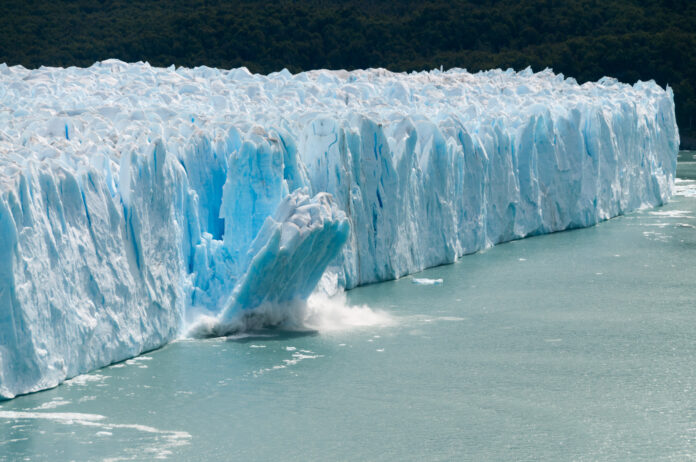
- Glacier: A glacier is a big slow-moving river made of ice. Glaciers usually move about one metre each day, but sometimes go much slower. Glaciers in the Canadian Arctic have been around for thousands of years.
- Iceberg: An iceberg is a big chunk of ice that broke off a glacier and now floats in the ocean.
- Formation of glaciers: Glaciers start to form in places where it snows all year, like high in the mountains. As more snow falls, it presses down on the layers below, and the snow changes to ice crystals. It takes more than 100 years for snow to become glacier ice.
- Advancing glaciers: This is when a glacier gets bigger and moves forward. It happens when more snow and ice is added than melts.
- Retreating glaciers: This is when a glacier gets smaller because it melts faster than new snow/ice adds to it. This affects the thickness of the glacier, as well as the position if the edge, which goes back up the mountain every year.
- Climate change: This is when the usual weather in a place changes over time, for example, warmer summers or more rain. Regional climates everywhere are changing because there is more heat in the atmosphere, also called global warming.
- Human-driven climate change: People’s activities, like burning fossil fuels for energy or cutting down trees, causes an increase in heat-trapping gases in the atmosphere. This leads to regional climates changing.
-
Introduction to the story
Explain to the students that in this episode, Olivia is participating in the Go Green Race. To stay in the race, she must decide whether what is happening to glaciers today is natural or not, and why. She only has three hours to find the answer
-
Active listening support
Introduce the Listening Organizer t-chart to the students and explain how to use it as they are listening.
While Listening
Remind students as they listen to write down facts about climate change and glaciers on the left side of their t-chart and questions they have about climate change and glaciers on the right side.
After Listening
Reflect on the story
Ask students to respond to the listening comprehension questions and share their responses with a partner, small group, or the whole class.
Listening comprehension questions
Classroom discussion questions
Take time for student reflection on the audio story. Use the discussion questions to focus students on key themes and ways we can debunk myths.
- Who said this? Is it a scientist, teacher, or trusted organization?
- Is there evidence? Are there facts, measurements, or research?
- Can we find it in more than one trusted place? If lots of scientists agree, it is more likely to be true.
- Is it science or opinion? Science uses evidence and testing. Opinions are just personal views. Always ask for the proof. Just like when we answer math problems, we need to see the work.
- Is it trying to scare us? Myths often use big feelings instead of facts.
Next Step
As a class, select some climate change myths to debunk and learn what is being done to fight climate change. Below are some resources that can help you get started:
Earth Rangers Homeroom
- Understanding Climate Change Myths: Misunderstandings about climate change are very common, and it can be hard to know what’s true. This overview gives some basics to help kids tell fact from fiction and breaks down two common climate change myths.
- Busting Climate Change Myths: Ten common climate change myths explained in student-friendly language.
Earth Rangers Challenge
- Myth-Buster Challenge: Children learn about common climate change myths, what is really happening, and take action to help fight climate change in accessible ways
Government of Canada
- Resources for Educators: A collection of resources for all ages and levels.
- “What is” Video series: Short videos aimed towards children including What is Climate Change? and What is Climate change Adaptation?
- Ask-A-Scientist series: Short student-friendly videos where scientists answer questions including How much ice has melted in the Arctic?, Why are Canada’s ice shelves disappearing?, and Can we stop climate change?
Listen to the whole Earth Rangers Podcast episode
Learn more about the Earth Rangers Podcast