
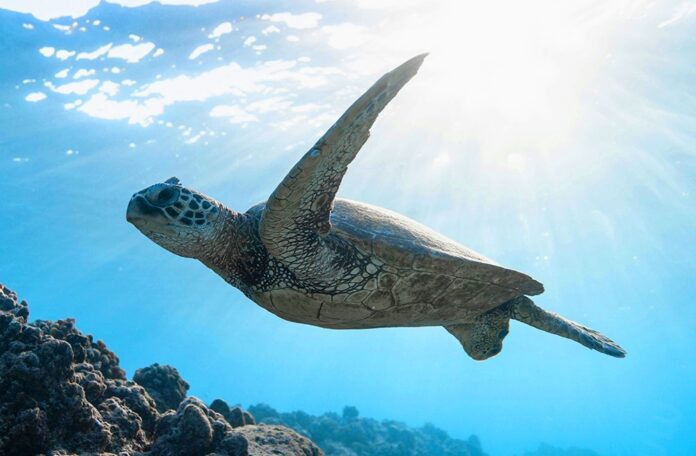

Play a game to learn about how plastic effects sea turtles, then educate others on actions that can be taken to help sea animals!
Grade Level: K-3
Learning Objectives:
- Recognize how plastic can impact the environment
- Formulate suggestions of how to protect animals
During this activity students will:
- Become aware of how plastic ends up in the environment
- Learn why animals eat it and how it affects them
- Reflect on ways to keep plastic out of the environment
Materials
- Tokens or small squares of cardstock in 3 different colours (about 100 for a group of 20). One colour represents a plastic bag, one a plastic balloon and one a jellyfish.
Instructions
- In a large playing area:
- Mark off a space as home base
- Ask helpers to spread the tokens or cards widely spaced within the determined playing area.
- Explain the game:
- Tell students that they are going to be hungry sea turtles, and the tokens or cards represent items they can eat.
- Demonstrate how to “swim” through the playing area (moving slowly and moving their arms as if swimming).
- Explain that once they have 5 items, it is time to swim to home base. The game will end when everyone has 5 items.
- Play the game. When all have returned to home base, ask students to sort their tokens or cards by colour. Reveal what the different colours represent. Ask if there is anyone who didn’t eat any plastic.
- Explain that sea turtles typically eat jellyfish, and items like plastic bags and balloons can often look like jellyfish floating in the water. The turtles may ingest these items, and they take up space in their stomach, making them feel full without providing any actual nutrients. It can also block their digestive system, which can be fatal because the turtle can no longer feed properly.
- Next, discuss ways we can keep plastic out of the ocean, such as shoreline clean ups, using less plastic, etc. Select a way to share your learning and allow students to educate those around them on how to take care of our natural environment.
Resources
For more information about ocean plastic:
- The Problem with Ocean Plastic (Canadian Geographic): This 2-minute animated video explains how plastics in the ocean harm animals.
- Facts and Figures: Ocean Plastics 101 (Earth Rangers)
- 7 Facts About Ocean Plastic Pollution for Kids (kids.earth.org)
- Plastic Pollution: What’s the problem (Kids National Geographic)
Success Stories!
Youth can get involved in conservation efforts near and far. James Wilson, 16, (CBC Kids) and Kiera MacDonald, 9, (CBC Kids) both helped track leatherback turtles from Canada to the Caribbean.